
complete guide to on page seo,off page seo& technical seo
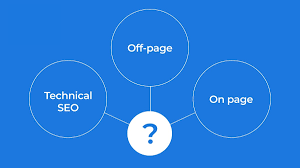
Search Engine Optimization (SEO) is one of the most effective digital marketing strategies for improving website visibility, increasing organic traffic, and growing businesses online. Understanding the different types of SEO helps businesses build a strong online presence and improve Google rankings.The three main types of SEO are On-Page SEO, Off-Page SEO, and Technical SEO. Each type plays an important role in helping websites rank higher on search engines and attract potential customers.
On page SEO vs Off Page SEO: Key Differences
What is On Page SEO
On-Page SEO refers to the optimization techniques used directly on your website to improve search engine rankings and user experience. It focuses on content quality, keyword optimization, website structure, and internal linking.On-Page SEO helps search engines understand your content better and improves website relevance for targeted keywords.
Keyword Optimization
Meta Titles & Descriptions
Heading Structure
Internal Linking
Content Optimization
URL Optimization
What is Off Page SEO
Off-Page SEO refers to activities performed outside your website to improve authority, trust, and online reputation. It helps search engines measure the popularity and credibility of your website.Off-Page SEO mainly focuses on building backlinks, increasing brand visibility, and improving domain authority.
Backlink Building
Guest Posting
Social Media Sharing
Brand Mentions
Business Listings
Local Citations
What is Technical SEO
Technical SEO focuses on optimizing the technical structure of a website to help search engines crawl, index, and rank pages efficiently. It improves website performance, speed, security, and usability.Technical SEO ensures that search engines can access and understand your website without issues.
Website Speed Optimization
Mobile Responsiveness
XML Sitemap
HTTPS Security
Broken Link Fixing
Structured Data / Schema
| SEO Type | Main Focus | Example |
|---|---|---|
| On-Page SEO | Website content optimization | Keywords, headings |
| Off-Page SEO | Website authority | Backlinks |
| Technical SEO | Website performance | Speed, indexing |
Which Is More Important: On-Page SEO or Off-Page SEO?
Both On-Page SEO and Off-Page SEO are essential for improving website rankings and online visibility. Instead of choosing one over the other, businesses should understand how both SEO strategies work together to achieve better search engine performance.
On-Page SEO Builds Website Relevance
On-Page SEO helps search engines understand what your website is about. It focuses on optimizing website content, keywords, headings, meta tags, internal links, and overall user experience.When pages are properly optimized, search engines can easily identify the topic and relevance of the content for specific search queries. High-quality content also helps users find accurate and useful information.
For example, if a website includes optimized content, relevant keywords, and clear page structure, search engines are more likely to rank those pages for related searches.
Off-Page SEO Builds Website Authority
Off-Page SEO focuses on increasing website trust and authority through external signals such as backlinks, social media sharing, brand mentions, and local citations.Search engines consider backlinks from trusted websites as a sign of credibility and popularity. When multiple authoritative websites link to your content, it signals that your website provides valuable information.
Strong Off-Page SEO can improve domain authority and help websites compete for higher rankings in search results.
Why Both SEO Strategies Are Important Together
On-Page SEO and Off-Page SEO work together to create a complete SEO strategy. A website with optimized content but no authority may struggle to rank competitively. Similarly, a website with many backlinks but poor-quality content may fail to keep visitors engaged.A website with good content but no backlinks may struggle to rank, while a website with backlinks but poor content may not retain visitors.
Common On-Page SEO Mistakes to Avoid
Keyword Stuffing
Using too many keywords unnaturally.
Missing Meta Tags
Pages without optimized titles and descriptions.
Poor Internal Linking
Not connecting related pages properly.
Slow Page Speed
Large images and poor optimization affecting performance.
Duplicate Content
Using copied or repeated content across pages.
Common Off-Page SEO Mistakes to Avoid
Buying Low-Quality Backlinks
Spam backlinks can hurt rankings.
Ignoring Social Media
Losing opportunities for traffic and brand awareness.
Inconsistent Local Citations
Different business information across directories.
Low-Quality Guest Posts
Publishing on irrelevant websites.
Benefits of SEO for Businesses in Abu Dhabi
SEO helps businesses in Abu Dhabi reach local customers and compete effectively in the digital market.
Increased Online Visibility
SEO helps businesses appear in Google search results when customers search for related services.
Higher Website Traffic
Optimized websites attract more visitors through organic search.
Better Lead Generation
SEO brings targeted traffic that is more likely to convert into customers.
Improved Brand Trust
Higher search rankings increase customer confidence and credibility.
Long-Term Business Growth
SEO provides sustainable online growth and long-term marketing results.
Why Understanding Different Types of SEO is Important
SEO is an important part of digital marketing that helps websites improve their visibility on search engines like Google. Understanding the difference between On-Page SEO, Off-Page SEO, and Technical SEO is essential for building a strong online presence and improving website performance. Each type of SEO works differently, but together they help websites rank higher, attract more organic traffic, and provide a better user experience.
On-Page SEO focuses on optimizing the content and structure inside a website. It includes keyword optimization, headings, meta descriptions, image ALT text, and internal linking to help search engines understand website content effectively. Good On-Page SEO improves content relevance and helps users find valuable information easily.
Off-Page SEO focuses on improving website authority and trust through activities outside the website. This includes backlink building, guest posting, social media sharing, business listings, and brand mentions. Off-Page SEO helps search engines recognize a website as trustworthy and credible, which improves rankings and online visibility.
Technical SEO focuses on improving website speed, mobile responsiveness, security, crawlability, indexing, and overall technical performance. It ensures that search engines can access and understand website content properly while providing a smooth experience for users across all devices.
A successful SEO strategy requires a balance of all three SEO types. Combining On-Page SEO, Off-Page SEO, and Technical SEO helps businesses improve Google rankings, increase organic traffic, and achieve long-term online growth.
How Search Engines Use On-Page and Off-Page SEO
Search engines like Google use advanced algorithms to analyze websites and determine which pages should rank higher in search results. On-Page SEO and Off-Page SEO help search engines understand the quality, relevance, authority, and performance of a website.A strong combination of both SEO strategies improves visibility, user experience, and search rankings.
Content Quality Analysis
Search engines evaluate the quality and relevance of website content to ensure users receive accurate and valuable information. Google analyzes factors such as keyword usage, originality, readability, heading structure, and user intent.High-quality content that answers user questions clearly has a better chance of ranking higher in search results.
Backlink Evaluation
Backlinks are considered one of the most important Off-Page SEO ranking factors. Search engines analyze the number and quality of websites linking to your pages.When trusted and authoritative websites link to your content, search engines view your website as more reliable and valuable. High-quality backlinks can improve domain authority and search visibility.
User Experience Signals
Search engines monitor how users interact with websites. Factors such as page speed, mobile responsiveness, navigation, and content readability affect user experience.If users stay longer on a website and engage with the content, search engines may consider the page more useful and relevant.
Website Trust and Authority
Google evaluates website trust through backlinks, secure connections, brand mentions, online reviews, and overall website reputation.Websites with strong authority and trustworthy content are more likely to rank higher compared to low-quality or spam websites.
Technical Performance Analysis
Search engines also analyze the technical structure of a website to ensure pages can be crawled and indexed properly. Technical SEO factors include website speed, mobile optimization, XML sitemaps, structured data, HTTPS security, and crawlability.A technically optimized website helps search engines understand content more efficiently and improves overall ranking performance.
Why Understanding Different Types of SEO
SEO is an important part of digital marketing that helps websites improve their visibility on search engines like Google. Understanding the difference between On-Page SEO, Off-Page SEO, and Technical SEO is essential for building a strong online presence and improving website performance. Each type of SEO works differently, but together they help websites rank higher, attract more organic traffic, and provide a better user experience.
On-Page SEO focuses on optimizing the content and structure inside a website. It includes keyword optimization, headings, meta descriptions, image ALT text, and internal linking to help search engines understand website content effectively. Good On-Page SEO improves content relevance and helps users find valuable information easily.
Off-Page SEO focuses on improving website authority and trust through activities outside the website. This includes backlink building, guest posting, social media sharing, business listings, and brand mentions. Off-Page SEO helps search engines recognize a website as trustworthy and credible, which improves rankings and online visibility.
Technical SEO focuses on improving website speed, mobile responsiveness, security, crawlability, indexing, and overall technical performance. It ensures that search engines can access and understand website content properly while providing a smooth experience for users across all devices.
A successful SEO strategy requires a balance of all three SEO types. Combining On-Page SEO, Off-Page SEO, and Technical SEO helps businesses improve Google rankings, increase organic traffic, and achieve long-term online growth.
FAQ
What is On-Page SEO and Why is it Important?
On-Page SEO focuses on optimizing website content, keywords, headings, meta descriptions, and internal links to improve Google rankings and user experience. It helps search engines understand website content more effectively.
How Does Off-Page SEO Improve Website Rankings?
Off-Page SEO improves website authority and trust through backlink building, guest posting, brand mentions, and social media sharing. These strategies help increase online visibility and search engine credibility.
Why is Technical SEO Important for a Website?
Technical SEO improves website speed, mobile responsiveness, security, indexing, and crawlability. It helps search engines access and rank website content efficiently while improving overall website performance.
Which SEO Strategy is Best for Improving Google Rankings?
A successful SEO strategy combines On-Page SEO, Off-Page SEO, and Technical SEO to improve website relevance, authority, performance, and long-term Google rankings.
How Do Different Types of SEO Help Businesses Grow Online?
Different SEO strategies help businesses improve search visibility, increase organic traffic, build customer trust, and strengthen online presence through optimized website performance and digital marketing techniques.